From Wireframes to AI Prototypes
AI prototyping accelerates product validation, aligns teams, and impresses investors by quickly turning ideas into interactive demos—yet it’s vital to distinguish prototypes from production-ready solutions to avoid costly pitfalls and ensure real-world value.
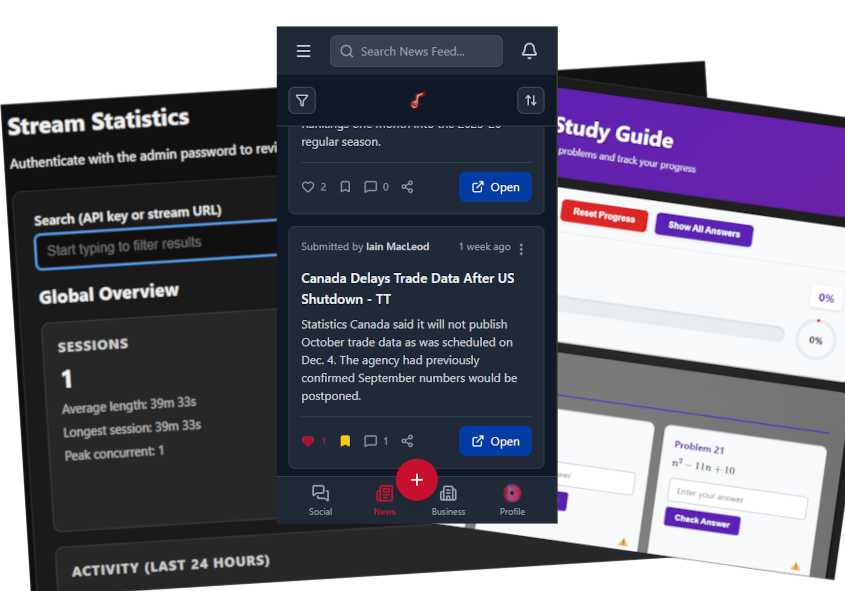
For years, product teams relied on tools like Figma, Sketch, Penpot and whiteboards to wireframe and demonstrate layouts to clients. These assets helped align stakeholders visually, but they stopped short of showing how a product might behave in the real world. Now, AI‑powered tools and IDEs can generate working prototypes and even full-stack scaffolds from prompts, user stories, and design files.
This shift moves product owners from “screen designers” to “demonstration developers.” Instead of just drawing interfaces, they can quickly spin up clickable flows or semi-functional apps that demonstrate value to users, investors, and development partners.
The New Superpower: Product Ownership
AI prototyping unlocks an underrated skill: strong product ownership. When an AI agent can turn user stories, acceptance criteria, and design context into code, the quality of those stories becomes a strategic differentiator. Clear problem statements, well-defined user personas, and prioritized use cases tell the AI what to build and tell stakeholders why it matters.
In this world, the product owner becomes a creator rather than a director. The job is to articulate outcomes, constraints, and edge cases so AI and human developers can collaborate on solutions that actually move business metrics, not just generate flashy screens.
Benefits of Prototyping with AI
Used well, AI prototyping can dramatically accelerate learning and alignment for product teams. For my business, AI development for prototyping allows me to help clients visualize their ideas and provide a means for discussion and feedback collection.
Key benefits include:
- Faster iteration: AI tools can generate multiple variations of a flow, layout, or feature in minutes, allowing you to explore more ideas without weeks of manual effort.
- Investor‑ready narratives: Semi-functional prototypes make it easier for clients to show real-world value to investors, going beyond slides to something they can click, test, and discuss.
- Better cross‑functional collaboration: When prototypes are grounded in user stories and real data, designers, product owners, and developers can converge on a shared understanding of scope and value.
- Lower upfront cost: Generating digital prototypes with AI reduces the need for expensive manual builds and repeated rewrites, allowing you to test concepts earlier and at a fraction of the cost.
These advantages help evaluate ideas earlier, which is especially important for startups and clients seeking funding or executive buy-in.
The Hidden Downfalls and Risks
The speed and polish of AI prototypes can also create dangerous illusions if teams are not careful.
Common pitfalls include:
- Mistaking prototype for product: A prototype generated in a few days can look “production ready,” but it may lack robust architecture, security, performance considerations, and test coverage. Stakeholders may underestimate the time and investment required to turn it into a scalable product.
- False validation: Users and investors can be dazzled by a smooth UI and animations, giving positive feedback on aesthetics while the underlying value proposition remains unproven.
- Technical debt by design: If teams push AI-generated prototypes straight into production, they risk inheriting brittle code, poor abstractions, and hidden complexity that slows future development.
Without strong product and engineering discipline, AI prototypes can turn into expensive rework rather than a shortcut to market.
Why “Production Ready” Still Matters
It is critical to explicitly frame AI prototypes as learning tools, not final deliverables. A clickable demo is fantastic for storytelling, funding conversations, and developer onboarding, but it should be treated as disposable when needed.
Draw a clear line between “prototype” and “production.” Use AI to explore, validate assumptions, and communicate vision, then rely on engineering best practices—architecture, scalability, testing, observability, and security—to build the real product.
Making AI Prototyping Work for You
To harness AI prototyping effectively as a product owner:
- Lead with user stories: Describe users, problems, and outcomes in crisp language so AI-generated prototypes align with real needs rather than random ideas. Plan, plan, plan - development IDEs like Cursor allow you to Plan before implementing, often bringing up important questions and allowing you to continue to tweak and improve your ideas.
- Set expectations early: Tell clients, investors, and developers that prototypes are experiments. Emphasize that they demonstrate value, not production readiness. This is critical!
- Validate value, not just visuals: Pair prototypes with user interviews, usability tests, and metrics hypotheses to ensure you are learning about impact, not just aesthetics.
- Collaborate closely with developers: Treat AI output as a conversation starter. Bring engineers in early to assess feasibility, identify risks, and design a sane path from prototype to production.
When combined with strong product thinking, AI and modern IDEs turn prototyping into a strategic advantage. The real power is not that AI can write code—it is that product owners can translate vision into user stories, rapidly test them in the real world, and guide teams toward building the right thing, not just a shiny thing.
If you're ready to take your business to the next level and want expert support, I’m here to help. Whether you need guidance, strategy, or hands-on assistance, don’t hesitate to reach out—I’d love to partner with you on your journey to success.